

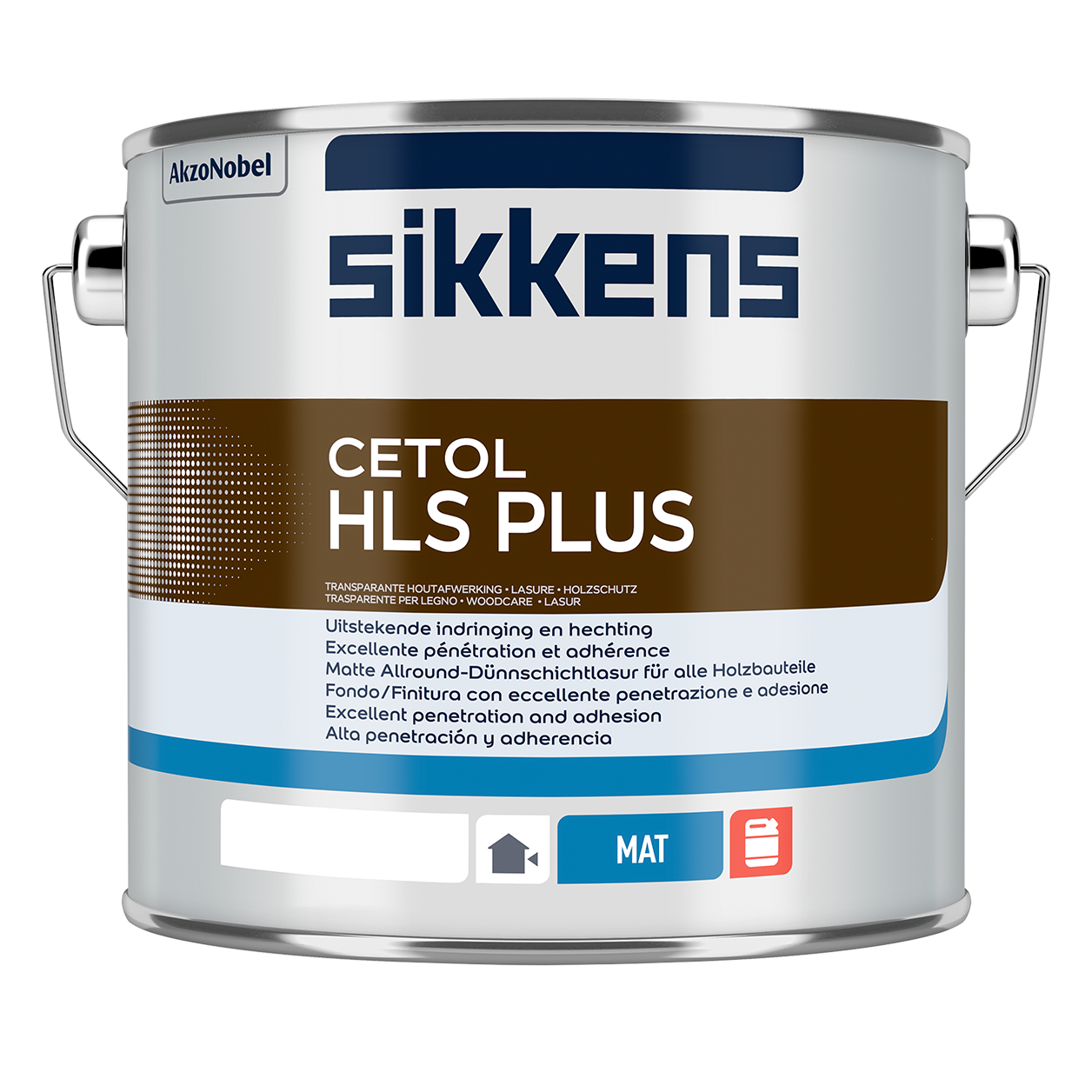
Sikkens Cetol HLS
Available in:
1L
2.5L
5L
From
£38.95
Inc. VAT
£32.46
Ex. VAT
Cetol HLS Plus is a low build, solvent-borne, semi-transparent woodstain for use on exterior softwood and hardwood substrates such as cladding, fascias, soffits, rough sawn timber, fencing, or components subject to high levels of wear and abrasion, such as garden furniture, handrails and exterior decking. Cetol HLS plus is applied as a base stain prior to the application of higher build finishes such as Cetol Filter 7 plus or Cetol THB plus on smooth planed exterior joinery. Cetol HLS plus should not be used alone as a finish for hardwood timbers other than decking
Highly translucent to bring out the beauty of woodgrain
Protects against mould and algae
Resistance to UV radiation, peeling and cracking
Microporous and water-repellent
Cetol HLS Plus is a low build, solvent-borne, semi-transparent woodstain for use on exterior softwood and hardwood substrates such as cladding, fascias, soffits, rough sawn timber, fencing, or components subject to high levels of wear and abrasion, such as garden furniture, handrails and exterior decking. Cetol HLS plus is applied as a base stain prior to the application of higher build finishes such as Cetol Filter 7 plus or Cetol THB plus on smooth planed exterior joinery. Cetol HLS plus should not be used alone as a finish for hardwood timbers other than decking
Highly translucent to bring out the beauty of woodgrain
Protects against mould and algae
Resistance to UV radiation, peeling and cracking
Microporous and water-repellent
Description
Cetol HLS Plus is a low build, solvent-borne, semi-transparent woodstain for use on exterior softwood and hardwood substrates such as cladding, fascias, soffits, rough sawn timber, fencing, or components subject to high levels of wear and abrasion, such as garden furniture, handrails and exterior decking. Cetol HLS plus is applied as a base stain prior to the application of higher build finishes such as Cetol Filter 7 plus or Cetol THB plus on smooth planed exterior joinery. Cetol HLS plus should not be used alone as a finish for hardwood timbers other than decking
Technical/Safety Info.
| Product Type | Wood Stain |
| Short Description | A low build, solvent-borne, semi-gloss woodstain. Can be used both as a base stain and as a finishing coat. |
| Drying time (recoat) | 18-24 hours |
| Drying time (touch dry) | 4-6 hours |
| Suitable Surface | Lattices, Doors, Smooth Sawn Siding, Window frames, Fences, Sidings, garden shed, pergola, Shutter, carport, Shed, Door frames, Windows, Rails, Rough Sawn Siding |
| Coverage | 7-14 m²/L |
| General No. of Coats | 3 |
| Application description | Conditions : Do not apply if there is a risk of rain, or when air/substrate temperatures are below 5ºC or above 30ºC during application or drying periods. Protect from frost and rain until dry.Failure to meet these requirements may adversely affect the drying, visual quality and durability of the finish.Initial Procedure Ensure product is thoroughly stirred before and during application, otherwise sheen and colour variations may be experienced. Cetol HLS plus is supplied ready for use. Do not thin.Applying the product For best results use a good quality, long-haired, soft bristle brush. On new work, where practical, the initial coat should be applied all round prior to fixing. P ay special attention to any areas of exposed end grain, tops and bottoms of doors, and undersides of cills.The product should be applied in a full flowing coat (working well into joints, and ensuring end grains or sawn timbers are saturated with product). Excess surface material should be re-distributed after 5-20 minutes (depending on conditions), using a dry brush (which should be periodically dried with a lint-free cloth) and the minimum number of strokes required to produce an even overall colour. This ensures that the first coat satisfies the porosity/absorption of the timber. Allow a minimum of 18-24 hours drying time. Where appropriate (e.g. for joinery items such as windows and doors), the first coat should be carefully denibbed using a fine grade nylon abrasive pad or a fine grade (P240 or finer) wet or dry silicon carbide abrasive paper, in the direction of the grain. Do not break through the surface coating. Remove all dust.Cetol HLS plus should be applied in a full flowing manner in the direction of the grain, using the minimum number of brush strokes necessary to produce an acceptable finish. Avoid overbrushing, as this will reduce the protection afforded.Subsequent coatings should be applied as soon as possible after the previous coat has dried, but no sooner than 12-24 hours, in order to provide full protection. In any event this period should not extend beyond three months, otherwise additional preparation and coats may be necessary. If applied to exterior timber and the contract is of long duration, it is suggested that a further coat be applied prior to handover to make good any weathering during the construction period |
| Cleaning | Cleaning After Final Use: Clean brushes and rollers immediately after final use to reuse them for future projects, saving you money and reducing waste. Cleaning Steps: 1. Remove Excess Product: Scrape off leftover product into a container for reuse. 2. Use Brush Cleaner: Use a Brush Cleaner to clean brushes and rollers. 3. Reuse Brush Cleaner: Allow the paint solids to settle and reuse the cleaner by pouring the clear liquid into another container. 4. Dry Naturally: Let tools air-dry and store in a dry, dust-free area. Dispose Responsibly: Dispose of the remaining solids and used brush cleaner at a hazardous waste facility. Do not pour any solvent-based paint, brush cleaner or washings down the drain or onto the ground. Do not flush paint down the drain, including when cleaning painting tools |
| Storage | Storing & Responsible Disposal Do not use or store in extreme temperatures and protect from frost. Whenever possible, reuse, recycle, or donate leftover paint. Find local services at recyclenow.com. If no Community RePaint service is nearby, consider advertising paint locally—many good causes need it to brighten community spaces. Dispose Responsibly: Never pour paint or waste washings down drains or sinks. Follow instructions at recyclenow.com to recycle empty packs. Reuse Roller Cages: Remove sleeves and store cages in a dry, dust-free place. If brushes or sleeves cannot be cleaned or reused, dispose of them in general waste to avoid recycling issues. Paint Washings: Collect used brush cleaner in a container; don't pour it into drains or on the ground. Let solids settle, pour off clear liquid into another container for reuse or disposal. Dispose of remaining solids and used cleaner at a hazardous waste facility. Do not flush paint down drains, including when cleaning tools. |
Reviews
Datasheets & Downloads
- Sikkens Cetol HLS(TDS) cetol_hls_plus.pdf
- Sikkens Cetol HLS(CLP MSDS) si_gb_en_cetol_hls_plus_(voc2010)_006.pdf
- Sikkens Cetol HLS(CLP MSDS) si_gb_en_cetol_hls_plus_(voc2010)_077.pdf
- Sikkens Cetol HLS(CLP MSDS) si_gb_en_cetol_hls_plus_(voc2010)_048.pdf
- Sikkens Cetol HLS(CLP MSDS) si_gb_en_cetol_hls_plus_(voc2010)_010.pdf
- Sikkens Cetol HLS(CLP MSDS) si_gb_en_cetol_hls_plus_(voc2010)_tu.pdf
- Sikkens Cetol HLS(CLP MSDS) si_gb_en_cetol_hls_plus_(voc2010)_085.pdf
- Sikkens Cetol HLS(CLP MSDS) si_gb_en_cetol_hls_plus_(voc2010)_009.pdf
- Sikkens Cetol HLS(CLP MSDS) si_gb_en_cetol_hls_plus_(voc2010)_045.pdf
- Sikkens Cetol HLS(CLP MSDS) si_gb_en_cetol_hls_plus_(voc2010)_020.pdf
- Sikkens Cetol HLS(CLP MSDS) si_gb_en_cetol_filter_7_plus_045.pdf